
Is It Cheaper to Tile or Epoxy a Floor?
On paper, tile and epoxy can look like a close call — both show up in a similar per-square-foot range depending on the products chosen. The real difference shows up in labor, subfloor prep, and what happens over the next 10 years, not just the material cost on day one. Here's how the two actually compare.
Material Cost: Closer Than People Expect
Basic ceramic tile can be inexpensive per square foot, while porcelain or natural stone tile climbs quickly. A quality epoxy or polyaspartic system also has a range depending on the flake blend and topcoat chosen. Compared purely on material alone, neither one has a runaway advantage — the material line item usually isn't where the real cost gap comes from.
Labor Is Where Tile Gets Expensive
Tile installation is labor-intensive: the subfloor has to be leveled, often a cement backer board goes down first, tile is set piece by piece, spaced, leveled, and then grouted as a separate step days later. Every one of those stages is billable labor time. A full broadcast flake epoxy system is applied directly over prepared concrete in a handful of coats over one to a few days, with far fewer individual labor-intensive steps. For a typical garage or basement floor, labor is usually where tile pulls ahead in total cost, not materials.
Subfloor Prep: Different Problems, Different Costs
Tile needs a flat, stable, crack-isolated subfloor or it will crack along with any movement underneath it — that sometimes means self-leveling underlayment or crack-isolation membrane before a single tile goes down. Epoxy needs diamond-ground concrete for a mechanical bond, which handles minor unevenness and doesn't require the floor to be perfectly flat first. Both have real prep costs, but tile's prep requirements are usually more extensive on an existing garage or basement slab.
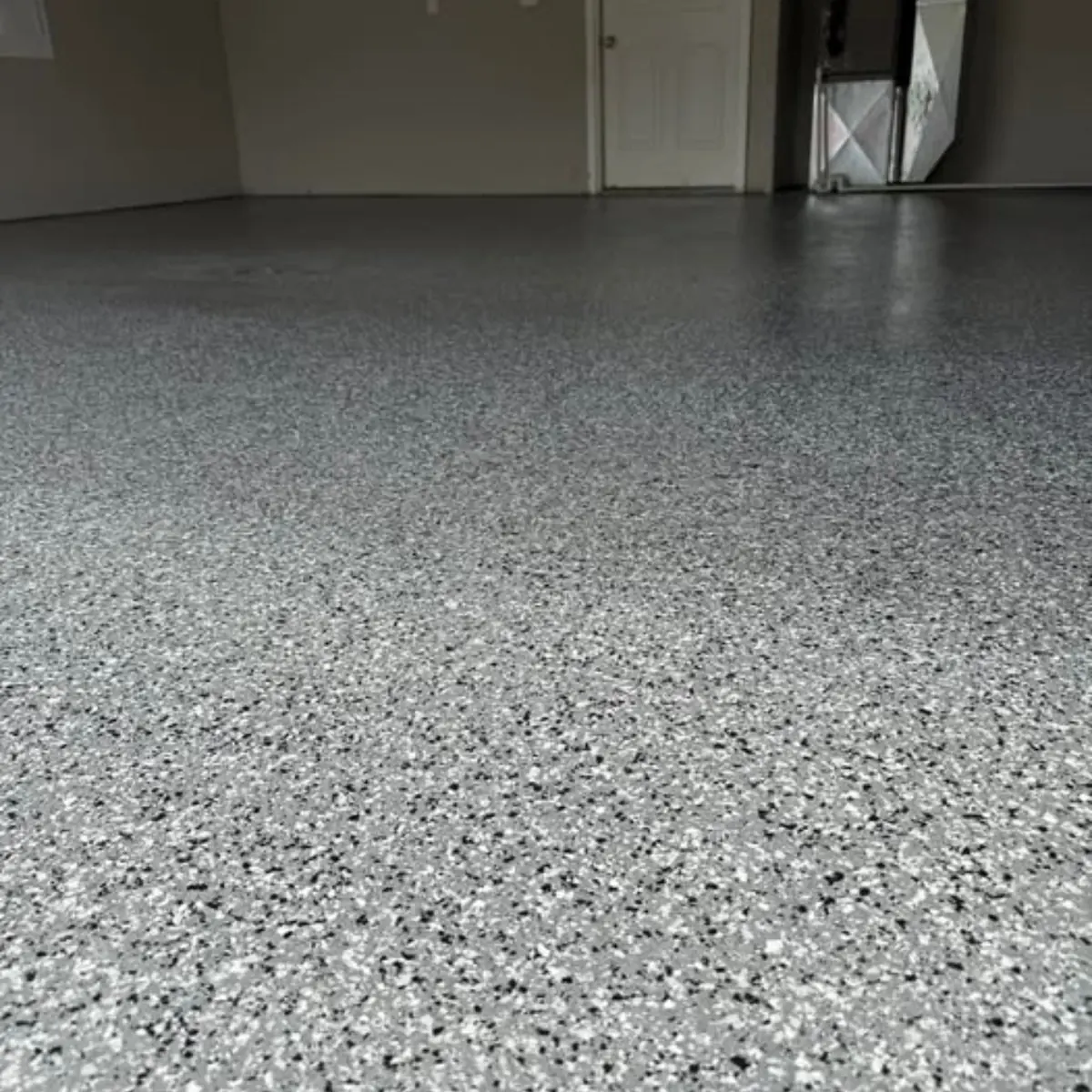
A full broadcast system is one continuous seamless surface — no grout lines to crack, stain, or scrub.
Grout: The Hidden Ongoing Cost of Tile
This is the cost comparison most people miss. Grout lines stain, crack, and need periodic resealing to stay water-resistant — and once grout fails, moisture gets underneath the tile, which can lead to loose or cracked tiles down the line. Epoxy is a single seamless surface with zero grout lines, so there's nothing to reseal, nothing for oil or road salt to soak into, and nothing that traps moisture against the substrate.
Durability: What Happens to Each Over Time
Individual tiles can crack from dropped tools, heavy impacts, or a car tire catching an edge — and replacing a single cracked tile years later rarely matches the original perfectly. A properly installed epoxy system doesn't have individual pieces to crack; it flexes slightly with the slab and resists chips and impacts as one continuous surface. For a garage floor specifically, which takes more abuse than almost any other floor in a house, that durability difference matters over a 10-20 year window.
Cold Climate Considerations
Tile and grout can be vulnerable to freeze-thaw cycling if any moisture gets underneath — water that seeps into hairline grout cracks and freezes can pop tiles loose. Mid-Missouri's winters put real freeze-thaw stress on garage floors specifically. A properly sealed epoxy system doesn't have that same vulnerability, since there's no grout joint for water to work into.
Which One Actually Costs Less?
For a garage floor, basement, or any space that sees real daily wear, epoxy usually comes out ahead on total cost once labor, prep, and 10+ years of maintenance are factored in — even when the material cost alone looks similar to tile. Tile can still make sense in spaces where its look is specifically what you want, like a kitchen or bathroom, but for utility spaces where durability and low maintenance matter most, it's rarely the cheaper choice once you look past the sticker price.
Get a Real Number for Your Space
Every home and slab is different, so rather than relying on rough national averages, the fastest way to see where you actually land is our Instant Price Calculator — build your project by square footage, coating system, and concrete condition and get a real ballpark in under a minute.
Frequently Asked Questions
Is epoxy flooring cheaper than tile?
For garage floors, basements, and other high-use utility spaces, epoxy usually costs less overall once you factor in tile's labor-intensive installation, subfloor prep requirements, and ongoing grout maintenance — even when material costs alone look similar.
Does tile last longer than epoxy?
Not necessarily. Individual tiles can crack from impacts and grout can fail over time, allowing moisture underneath. A properly installed epoxy system is a single seamless surface without grout joints, and typically lasts 15-20+ years with minimal maintenance.
Is tile or epoxy better for a garage floor?
Epoxy is generally the better fit for garages specifically, since it handles hot tires, dropped tools, and freeze-thaw conditions as one continuous surface without grout lines that can crack or stain.
Why is tile installation more expensive than it looks?
Tile requires multiple separate labor stages — subfloor leveling, sometimes backer board, individual tile setting, spacing, and a separate grouting step days later. Each stage adds labor cost that isn't obvious when comparing material prices alone.
Related Articles
Want a Real Number for Your Space?
Skip the guessing — get an instant epoxy estimate for your exact square footage in under a minute.
Get My Instant Estimate →