
Can Mold Grow Under an Epoxy Floor?
This is one of the most common questions we get, especially from homeowners coating a basement or an older garage slab. The short answer: epoxy itself is not organic material and doesn't feed mold growth — but that doesn't mean mold is impossible under a coated floor. The real risk isn't the epoxy. It's what happens when a coating is applied over a slab with unresolved moisture problems.
How Moisture Gets Trapped Under a Coating
Concrete is porous, and moisture vapor naturally moves up through a slab from the soil underneath — a process called moisture vapor transmission. On an uncoated floor, that moisture simply evaporates off the surface. Once you seal the surface with epoxy, that natural evaporation path is blocked. If there's already excess moisture moving through the slab, it can get trapped between the concrete and the coating instead of escaping, creating the kind of damp, dark environment mold and mildew actually need to grow — not because the epoxy itself is a food source, but because it created a moisture pocket.
Why Moisture Testing Before Installation Matters
This is exactly why a proper installation includes a moisture assessment before any coating goes down, especially in basements or slabs with a known history of dampness. A calcium chloride test or relative humidity probe measures how much moisture is actually moving through the concrete. If levels are too high for a standard system, the fix is either addressing the moisture source first (grading, drainage, a sump system) or using a moisture-mitigating primer designed to handle higher vapor transmission rates before the topcoat goes on.
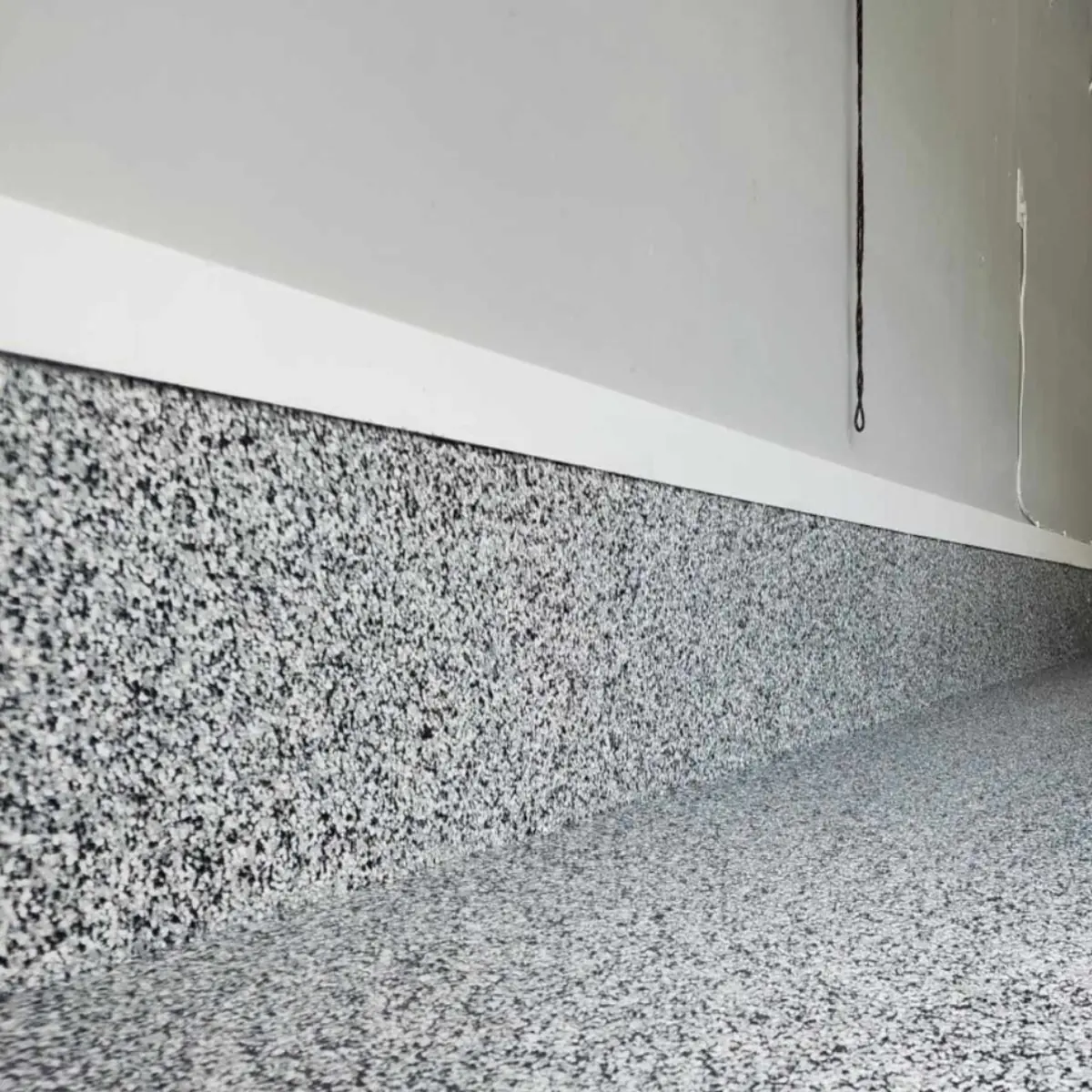
A properly sealed cove base closes off the wall-to-floor joint, one of the most common places moisture sneaks in.
Garage Floors vs. Basement Floors: Different Risk Levels
Garages are generally lower risk than basements. Most garage slabs are poured on grade with reasonable drainage away from the structure, and garages get more air exchange from the door opening and closing. Basements are a different story — below-grade concrete sits closer to groundwater, drainage is harder to control, and airflow is often minimal. If you're coating a basement floor, moisture testing isn't optional in our book; it's a standard part of the job.
How We Prevent Moisture Problems on Every Install
Every floor we coat gets diamond ground, not just for adhesion but because it exposes the real condition of the slab — you can see staining patterns, efflorescence, and other moisture indicators that are invisible under a dirty, sealed surface. Combined with moisture testing on any slab with risk factors (basements, slabs near grade, older homes with no vapor barrier under the concrete), this is how a coated floor stays dry underneath instead of trapping problems you can't see once it's sealed.
Warning Signs of Trapped Moisture After Installation
If a floor was coated without proper moisture assessment, watch for: a musty smell near the floor that wasn't there before, discoloration or dark patches spreading from the edges or seams, the coating feeling soft or lifting slightly at the perimeter, or visible bubbling. Any of these are worth having looked at — not necessarily a sign of mold yet, but a sign moisture is moving somewhere it shouldn't be.
The Bottom Line
Epoxy doesn't cause mold, and a properly tested, properly installed floor is not a mold risk. The danger is sealing an untested slab that already has a moisture problem and trapping it underneath. If your installer skips moisture testing on a basement or a slab with a damp history, that's the question worth pushing back on before you sign anything.
If you are weighing a coating for a slab with a moisture history, you can estimate the right system for your slab in about a minute, then have us confirm it on site.
Frequently Asked Questions
Does epoxy flooring trap moisture?
Epoxy can trap moisture if it's applied over a concrete slab that already has excess moisture vapor moving through it, since the coating blocks the surface from naturally evaporating that moisture. This is why moisture testing before installation matters, especially for basements.
How do you know if there's moisture under your slab?
A calcium chloride test or relative humidity probe measures actual moisture vapor transmission through the concrete before coating. Visual clues like efflorescence (white mineral deposits), staining patterns, or a musty smell can also indicate a moisture issue worth testing for.
Is epoxy safe for basements?
Yes, when installed correctly. Basements carry higher moisture risk than garages since they're below grade, so a proper basement installation should always include moisture testing and, if needed, a moisture-mitigating primer before the coating goes down.
Can mold grow on top of an epoxy floor?
Epoxy's smooth, non-porous surface doesn't feed mold growth and is actually easier to keep mold-free than bare concrete, as long as spills and standing water are cleaned up normally. The risk discussed here is trapped moisture underneath the coating, not growth on top of it.
Related Articles
Worried About Moisture in Your Slab?
We test for it before we ever coat a floor. Get a free evaluation and an honest read on your concrete.
Get My Free Evaluation →