
What's the Difference Between One-Day and Multi-Day Epoxy?
"One-day epoxy" is a phrase you'll see a lot in flooring ads, usually promising a garage floor installed and ready to use in a single day. What's actually being sold under that label is almost always a polyaspartic system, not traditional epoxy — the chemistry is genuinely different, and understanding the difference helps explain why cure times, and prices, vary so much between contractors.
What Makes an Epoxy Cure Slowly
Traditional epoxy is a two-part resin system that cures through a chemical reaction that simply takes time — often 24 to 72 hours before it's ready for light use, and longer before it can handle full vehicle weight. That's not a flaw; it's just the chemistry. Epoxy has real strengths: excellent adhesion, a long track record, and it's generally more affordable as a base material.
What Makes Polyaspartic Faster
Polyaspartic coatings use a different resin chemistry that cures dramatically faster — sometimes within hours rather than days. That's what makes true "one-day" installations possible: grind, repair, basecoat, flake, and a polyaspartic topcoat, all done and curing by the end of a single work day. Polyaspartic is also more UV-stable than standard epoxy, meaning it resists yellowing in direct sunlight, and it tends to handle temperature swings better.
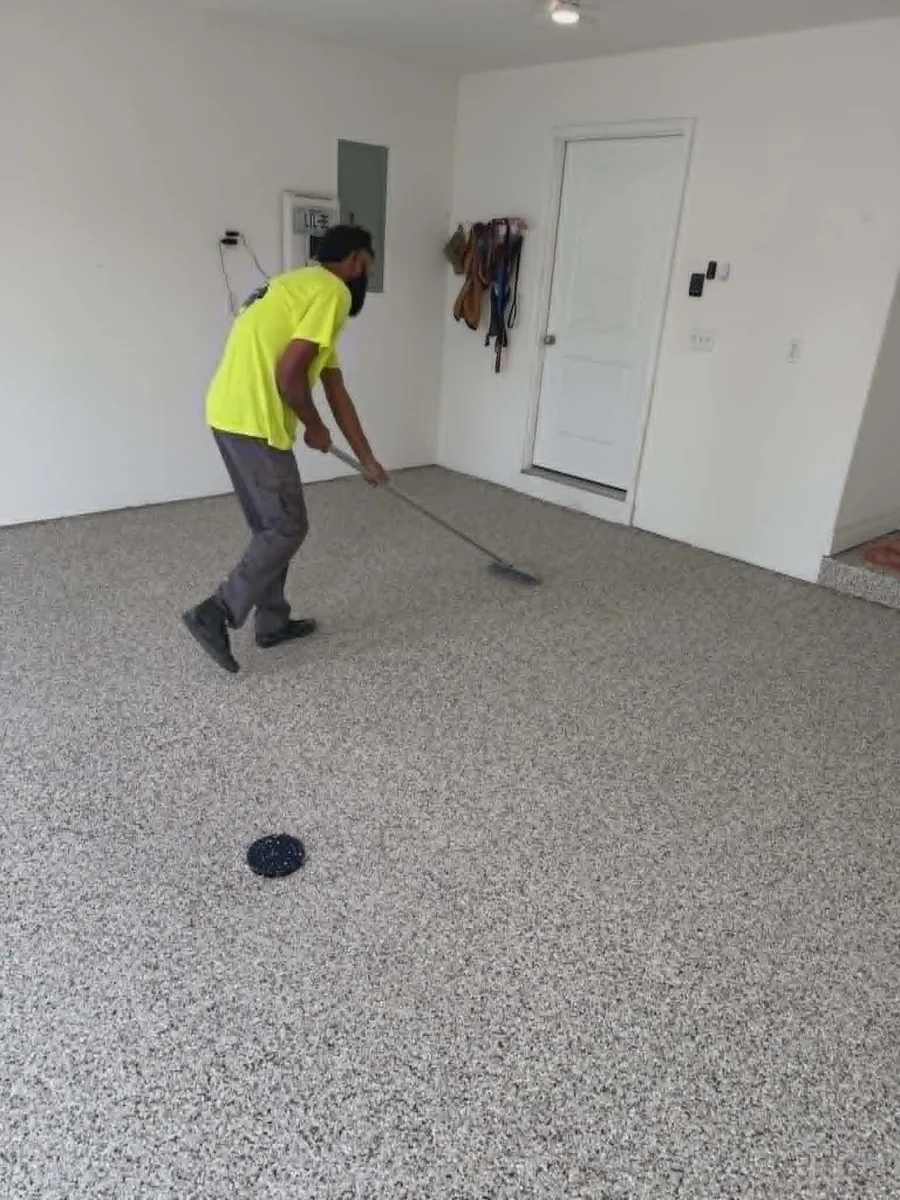
A polyaspartic topcoat curing fast enough to walk on within about 24 hours.
Why Most Professional Systems Actually Use Both
Here's what a lot of marketing skips: at Show Me Epoxy, and at most quality installers, "epoxy floors" and "one-day floors" aren't really two separate product categories. A typical install uses an epoxy basecoat for its strong adhesion and affordability, then a polyaspartic topcoat for its fast cure and durability. You get the bonding strength of epoxy and the speed and UV stability of polyaspartic in the same floor. When someone advertises a "one-day epoxy floor," this hybrid system is usually what they mean.
Does Faster Always Mean Better?
Not automatically. Polyaspartic's fast cure time is a real advantage, but it also means installers have a shorter working window to apply the product correctly before it starts setting up — which takes more skill and a well-coordinated crew. A rushed polyaspartic install by an inexperienced crew can actually go worse than a properly applied traditional epoxy system, because there's less room to fix mistakes mid-application. Speed is a benefit of the product, not a substitute for a skilled crew.
What This Means for Your Timeline
For most residential garage projects, the honest answer is that a professional crew can complete grinding, repairs, and a full coating system — basecoat, flake, polyaspartic topcoat — in a single day regardless of which base product is used, because the topcoat is what determines final cure speed. Two-day timelines usually come from extensive crack repair, previous coating removal, or larger commercial spaces, not from the coating chemistry itself. See our full breakdown in how long epoxy installation actually takes.
The Bottom Line
When you see "one-day epoxy" advertised, it almost always means a system using a fast-cure polyaspartic topcoat rather than a fundamentally different installation process. The real question to ask a contractor isn't "epoxy or one-day" — it's what specific products they're using in each layer, and how experienced their crew is at applying a fast-cure system correctly under time pressure.
Frequently Asked Questions
What is one-day epoxy actually made of?
“One-day epoxy” almost always refers to a system using a fast-cure polyaspartic topcoat over a standard epoxy basecoat, rather than a completely different product. The polyaspartic layer is what allows the floor to be walked on within about 24 hours.
Is polyaspartic better than traditional epoxy?
They serve different purposes. Polyaspartic cures faster, resists UV yellowing better, and handles temperature swings well. Traditional epoxy has excellent adhesion and is generally more affordable. Most professional systems use both together rather than choosing one exclusively.
Does a faster cure time mean lower quality?
No, but it does require a more experienced crew. Polyaspartic's fast cure gives installers a shorter working window to apply it correctly, so a rushed job by an inexperienced crew can go worse than a properly applied traditional epoxy system.
How long does a one-day epoxy floor take to fully cure?
Walk time is typically around 24 hours and drive time around 48 hours for most polyaspartic-topped systems, though this varies by product, temperature, and humidity. Full cure to maximum hardness can take longer even after the floor is usable.
Related Articles
Ask Us Which System Is Right for Your Timeline
We'll walk you through the real cure times and tradeoffs for your specific project during your free quote.
Get My Free Quote →