
Can You Apply Epoxy Over an Existing Concrete Garage Floor?
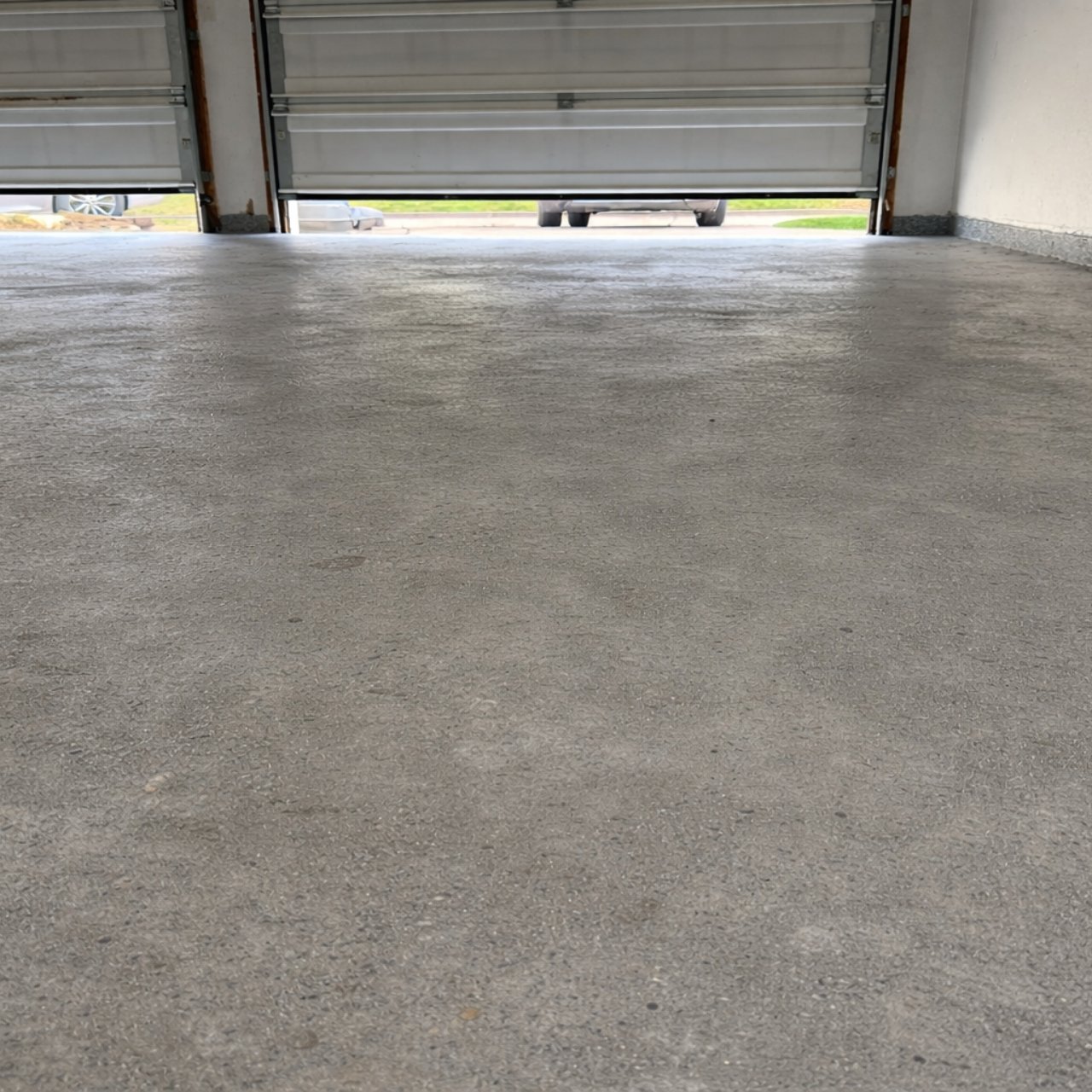
Short answer: yes. Most existing concrete garage floors can be coated with a professional epoxy or polyaspartic flooring system. In fact, at Show Me Epoxy, the vast majority of garage floors we install are existing concrete slabs — not brand-new construction.
So if you've been asking whether epoxy over old concrete is even possible, you're not alone. It's one of the most common questions we hear from homeowners across Jefferson City, Columbia, and the rest of Mid-Missouri. The good news is that age alone rarely rules a floor out.
The real question isn't whether your concrete is new or old. The real question is whether the concrete is properly prepared before the coating goes down. That one factor determines almost everything about how the finished floor looks and how long it lasts.
Most Existing Garage Floors Are Excellent Candidates
Age alone doesn't determine whether a garage floor can be coated. We've installed garage floor coatings on concrete that was:
- Less than a year old
- 10 years old
- 20+ years old
- 40+ years old
As long as the concrete is structurally sound, it can usually be transformed into a beautiful, durable floor. We've seen this play out on driveways, workshops, and two- and three-car garages throughout Jefferson City and the surrounding communities we serve.
What We Look For Before Installation
Before installing any concrete floor coating, we inspect the slab for a handful of important factors. This inspection is what separates a floor that lasts for decades from one that fails within a year or two.
Structural Cracks
Small shrinkage cracks are completely normal in concrete of almost any age. These are repaired during installation using specialized repair materials before the coating system is applied. Large structural movement cracks may require additional repair or evaluation, but they don't automatically mean the floor can't be coated.
Oil or Chemical Contamination
Years of vehicle leaks can leave oil embedded deep in the concrete. Professional installers remove contaminated areas and properly prepare the surface so the coating bonds correctly. Simply coating over oil almost always leads to failure — the epoxy may look fine on day one, but it won't stay bonded for long.
Moisture Issues
Moisture that moves up through concrete from underneath can cause coating problems if it isn't addressed first. If moisture is present, we can often recommend the appropriate moisture mitigation system before installation begins, so it doesn't undermine the new coating later.
Previous Coatings — Can You Epoxy Over Old Epoxy?
Many homeowners ask us this exact question: "Can you epoxy over old epoxy?" Sometimes — but usually not. If an existing coating is failing, peeling, or poorly bonded, it needs to be completely removed through professional grinding first. Installing a new coating directly over a failing one simply transfers the same problem to the new floor, and it will likely peel again in the same spots.
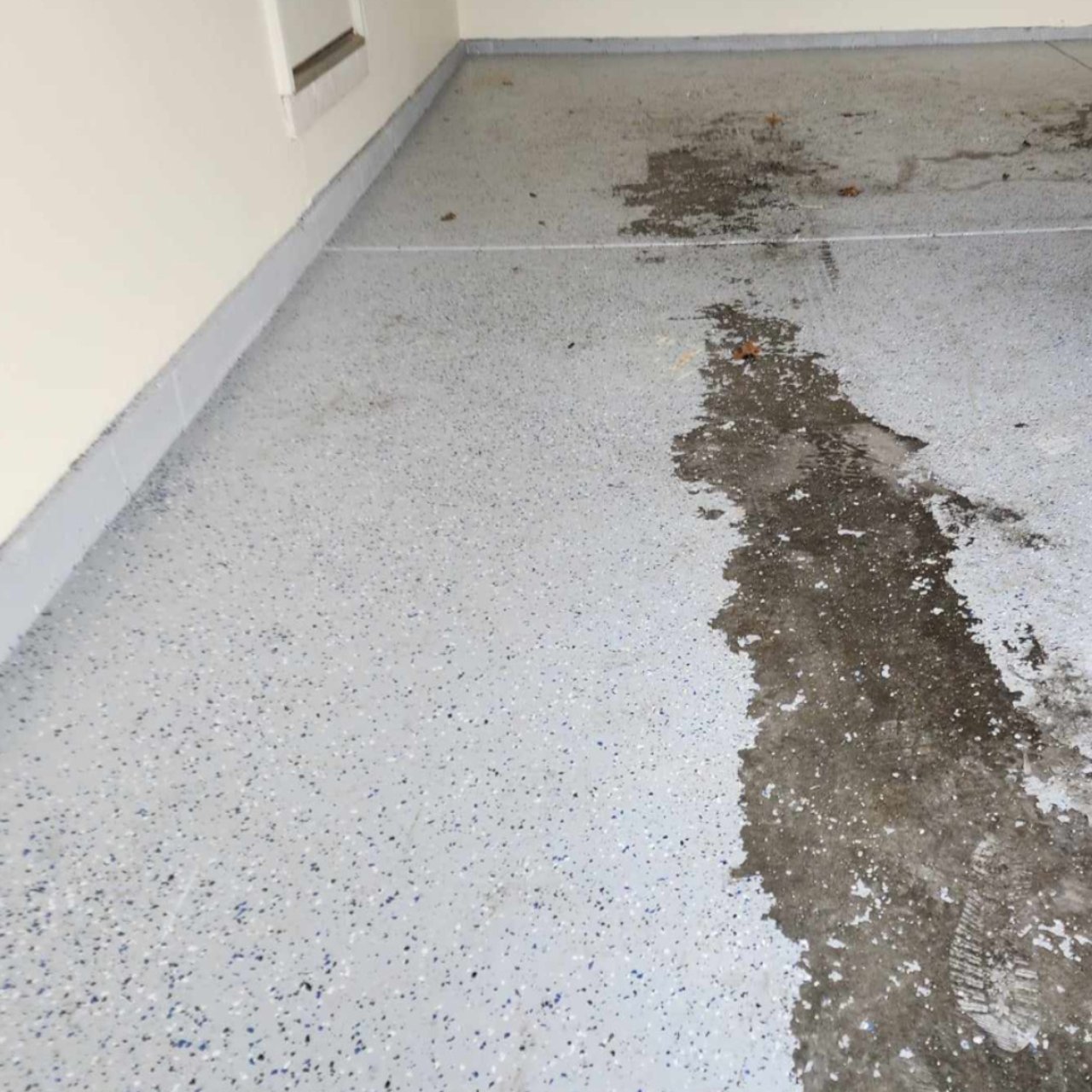
A DIY epoxy kit that failed within a year due to skipped surface prep. Coatings like this must be ground off before a new system is applied.
Epoxy Garage Floor Preparation Is Everything
This is where professional installation separates itself from DIY kits sold at hardware stores. Before any coating is applied, the concrete should be mechanically ground using industrial diamond grinders — not simply acid washed or pressure washed.
Proper epoxy garage floor preparation:
- Opens the pores of the concrete
- Removes contaminants like oil, sealers, and dust
- Removes weak, damaged surface concrete
- Creates the correct surface profile for adhesion
- Allows the coating to permanently, mechanically bond
Acid washing or pressure washing the floor by itself is not enough for a long-lasting installation. Those methods might make the concrete look clean, but they don't create the mechanical bond that a diamond-ground surface does. We cover this in more detail in our guide to why diamond grinding matters for any epoxy install.
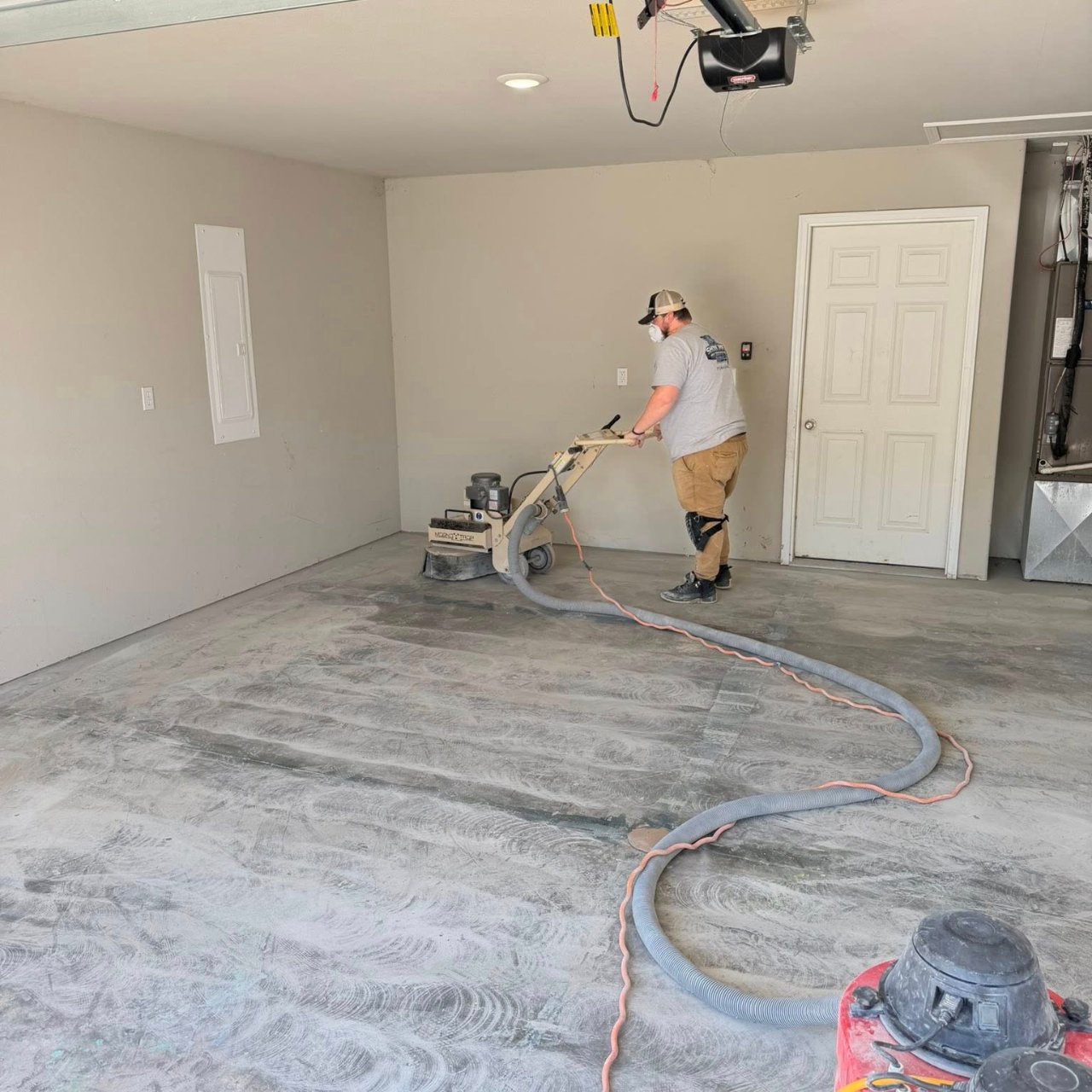
Mechanical diamond grinding on an existing concrete garage floor — the step that determines whether a coating bonds for good.
What About Cracks?
Most garage floors have cracks. That doesn't mean they can't be coated. Professional installers repair:
- Hairline cracks
- Control joints (if the homeowner wants them filled)
- Small pitting
- Surface imperfections
Once repaired and coated, many of these imperfections become virtually invisible under a full flake broadcast or solid-color finish.
Can Severely Damaged Concrete Still Be Saved?
Often, yes. Concrete with surface spalling, minor pitting, salt damage, cosmetic wear, or tire wear can frequently be restored with proper repairs before the coating system is installed. Every garage floor coating for existing concrete is a little different, which is why an in-person inspection matters so much more than a phone estimate.
We've walked into garages where the homeowner assumed the floor was a lost cause — stained from years of oil drips, pitted from de-icing salt tracked in during Missouri winters, or covered in an old coating that had bubbled and lifted in the corners. In nearly every one of those cases, the concrete underneath was still structurally fine. Once the damaged surface layer was ground away and the remaining cracks and low spots were repaired, the slab was ready for a coating that looked brand new.
New Construction vs. Existing Concrete: Does It Really Matter?
New concrete does have one consideration older concrete doesn't: cure time. Fresh concrete needs roughly 28 to 30 days to fully cure before it's ready for a coating. Coat it too soon and trapped moisture can cause bubbling or adhesion failure down the road.
Existing concrete has already cured, so that clock isn't a factor. Instead, the focus shifts entirely to condition — contamination, cracking, moisture, and whatever coatings or sealers may already be on the surface. In our experience, a 20-year-old garage floor with the right prep work often ends up performing just as well as a brand-new slab, sometimes better, because the concrete has had time to fully harden and stabilize.
"Eric and his crew were very easy to work with... The price is reasonable for the quality of work. I am very pleased with the outcome." — Michael Bohannon, Google Review
When Epoxy May Not Be the Right Choice
Although most garage floors can be coated, there are situations where additional work may be necessary first, including:
- Significant structural movement
- Heaving slabs
- Severe, ongoing moisture intrusion
- Major foundation issues
- Concrete that's deteriorated beyond repair
An experienced installer can determine the best path forward during an in-person estimate, and in rare cases may recommend addressing a structural issue before any coating work begins.
Why Professional Preparation Matters
The coating itself is only part of the system. The durability of your new floor depends largely on the preparation underneath it. Professional installers spend hours preparing the concrete because that's what determines whether the floor lasts for years — or starts peeling within months.
A properly prepared floor can provide decades of performance with minimal maintenance. That's true whether you're coating a brand-new slab or a 30-year-old driveway that's seen every Missouri winter since it was poured.
Frequently Asked Questions
Can epoxy be applied over old concrete?
Yes. Age alone doesn't determine whether a garage floor can be coated — we've installed epoxy over concrete that was less than a year old and concrete that was 40+ years old. What matters is whether the slab is structurally sound and properly prepared with mechanical diamond grinding before the coating goes down.
Can epoxy go over cracked concrete?
In most cases, yes. Small shrinkage cracks and hairline cracks are common and are repaired with specialized crack-repair materials during installation, before the coating is applied. Large structural movement cracks may need additional evaluation, but they don't automatically disqualify a floor from being coated.
Do you have to grind concrete before epoxy?
Yes, for a long-lasting result. Mechanical diamond grinding opens the pores of the concrete, removes contaminants and weak surface material, and creates the surface profile epoxy needs to permanently bond. Acid washing or pressure washing alone is not enough — coatings applied without grinding are far more likely to peel.
Can you epoxy over old epoxy?
Sometimes, but usually not recommended. If an existing coating is failing, peeling, or poorly bonded, it needs to be completely removed through professional grinding before a new coating is installed. Coating over a failing floor just transfers the same problem to the new system.
Get a Free Garage Floor Evaluation
If you're wondering whether your existing garage floor is a good candidate for an epoxy or polyaspartic coating, we'd be happy to take a look. We'll inspect your concrete, answer your questions, explain any repairs that may be needed, and provide a free estimate with no obligation.
Use our Instant Price Calculator to get a ballpark number in minutes, or contact us today to see what's possible for your garage.
Related Articles
Ready to Find Out If Your Floor Qualifies?
Get a free, no-pressure evaluation of your existing concrete. We'll tell you exactly what it needs.
Request My Free Evaluation →